Professor Gordon Slater · MBBS, FRACS
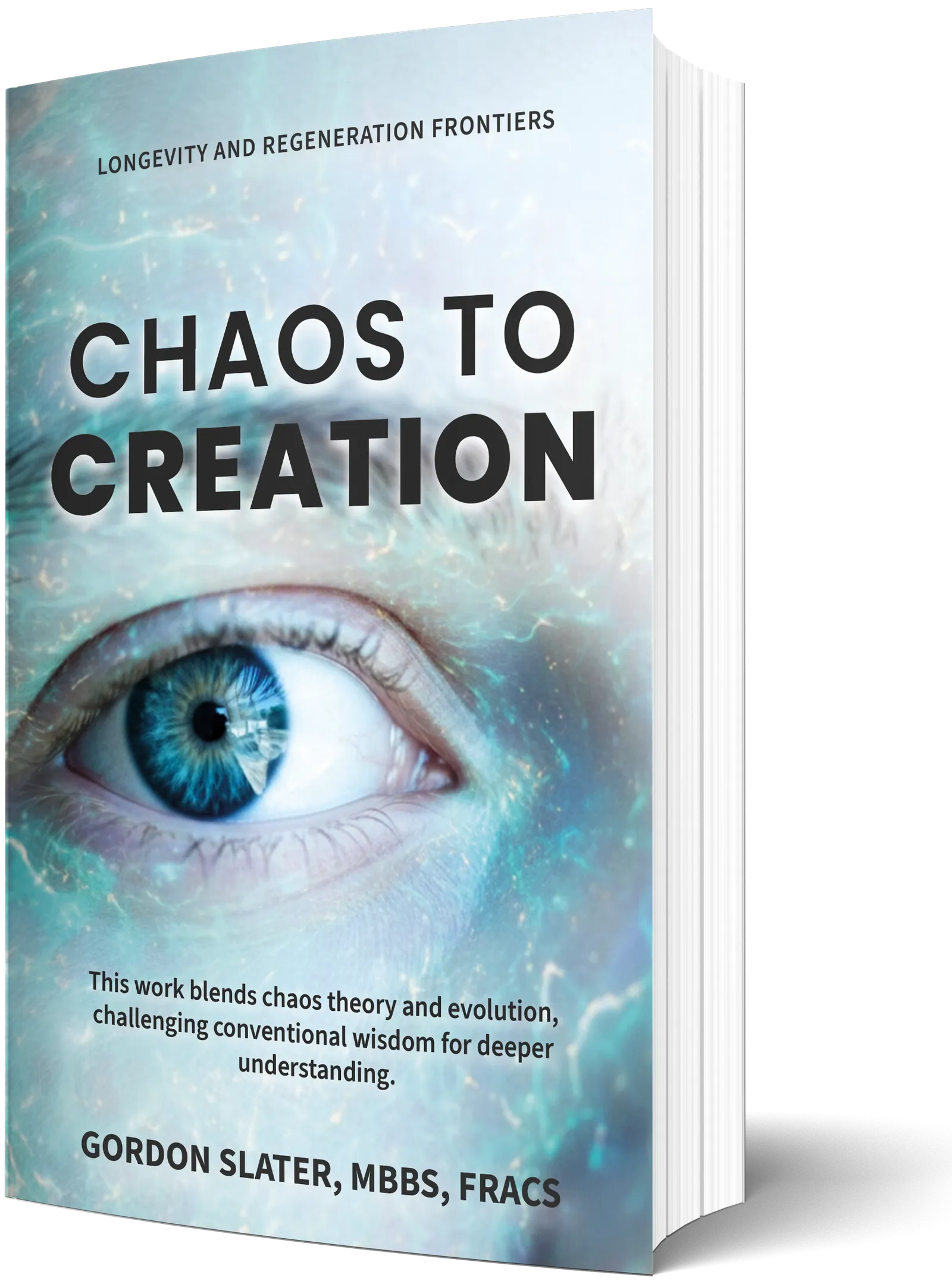
Chaos to Creation
A work of science and argument about why we age — and whether the body's own repair systems can be persuaded to hold the line.
The question
The question that started everything.
Three decades of operating gives you a particular view of the body. You see, directly and repeatedly, what tissue does when it is damaged — and what it does when it repairs. The machinery is extraordinary, and for most of a life it simply works.
Then, in the same patient, it begins to falter. The question that follows a surgeon home is the one this book was written to answer: if the body can rebuild itself, why does it stop — and is that stopping negotiable?
On the Origin of Species asked how life began. This book takes up the question from the other end: not how life began, but where it is going, and whether its duration is fixed.
The nine hallmarks
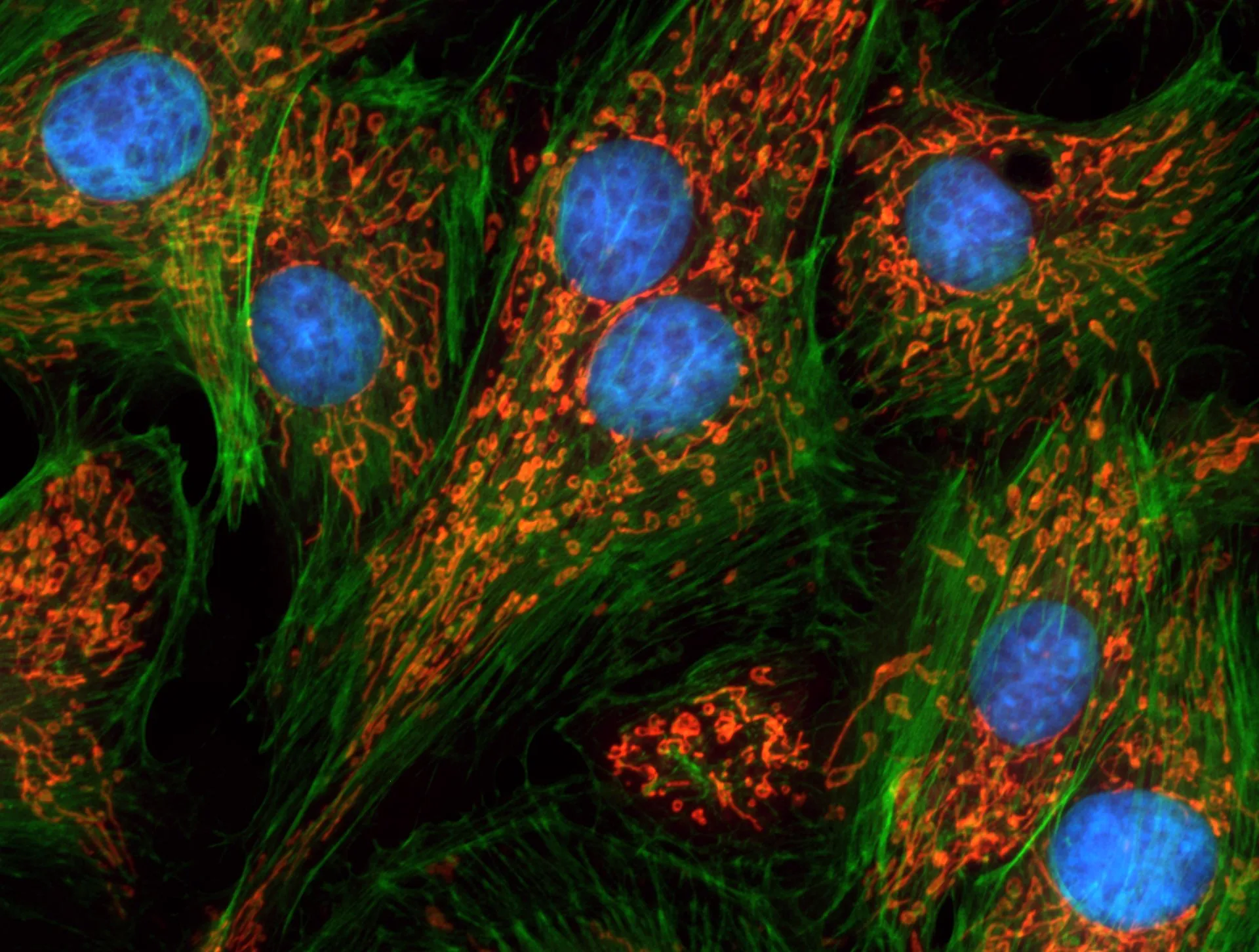
Aging is not one process. It is nine.
Each is a distinct mechanism of decline, and each is now a target. The book takes them one at a time, and asks what current science can actually do about them.
- 01
Genomic instability
DNA accumulates damage faster than repair systems can clear it. The blueprint degrades, and every copy afterwards inherits the error.
- 02
Telomere attrition
The protective caps on chromosomes shorten with each division. When they run out, the cell stops dividing altogether.
- 03
Epigenetic alterations
The switches controlling which genes are read drift out of position. The instructions are intact; the reading of them is not.
- 04
Loss of proteostasis
Protein folding and disposal machinery falters, and misfolded proteins accumulate faster than the cell can clear them.
- 05
Deregulated nutrient sensing
The pathways that read energy availability lose calibration, and growth signalling continues when it should quieten.
- 06
Mitochondrial dysfunction
The cell's power plants lose efficiency, producing less energy and more reactive damage as a by-product.
- 07
Cellular senescence
Damaged cells stop dividing but refuse to die, lingering in tissue and emitting inflammatory signals to their neighbours.
- 08
Stem cell exhaustion
The reserve populations that replace worn tissue are depleted. Regenerative capacity falls away.
- 09
Altered intercellular communication
Signalling between cells becomes noisy and inflammatory, so coordinated repair gives way to chronic low-grade disorder.
The argument
Darwin asked how life began. This asks where it is going — and whether its duration is fixed.
The author
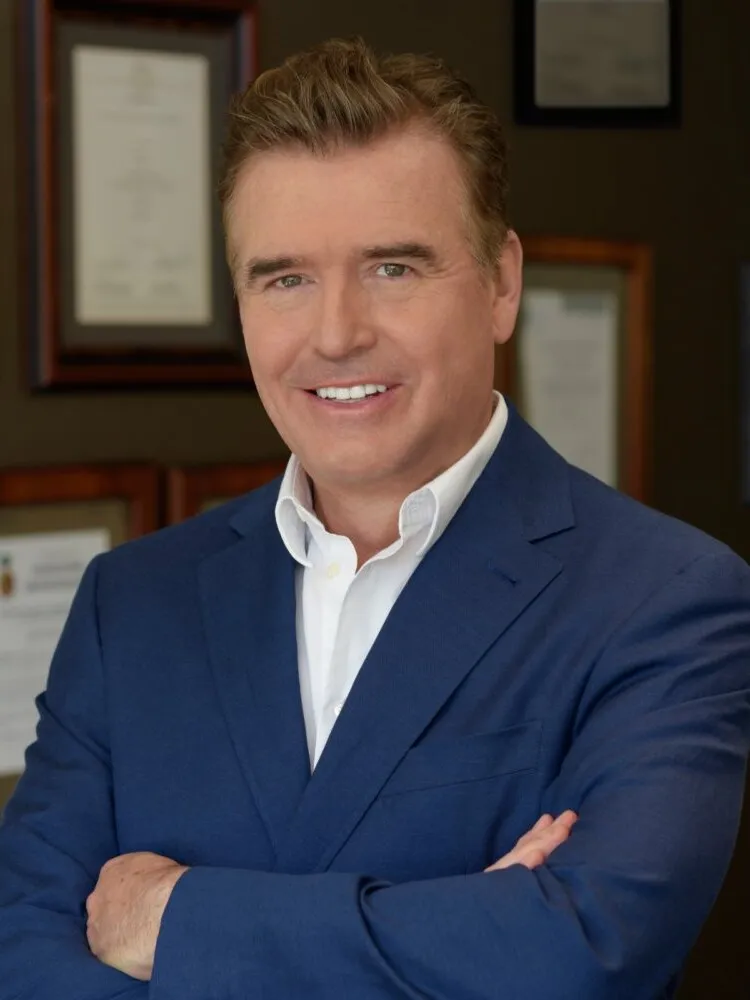
Professor Gordon Slater
MBBS, FRACS · Orthopaedic surgeon, researcher, author
Amazon Best Seller
Professor Gordon Slater is an orthopaedic surgeon with more than three decades of clinical experience. A Fellow of the Royal Australasian College of Surgeons and Professor at the University of Technology Sydney, he specialises in foot and ankle surgery and regenerative medicine.
Professor Gordon Slater is an orthopaedic surgeon specialising in foot and ankle surgery, with a career spanning more than three decades of clinical practice and research. He has been a Fellow of the Royal Australasian College of Surgeons in orthopaedics since 1997 and holds a professorial appointment at the University of Technology Sydney. He has published more than fifty peer-reviewed research papers, holds multiple patents for medical devices, and is the founder of Integrant Pty Ltd. In Chaos to Creation he examines what regenerative science may mean for the future of human health and longevity.
- FRACS (Orthopaedics)
- Royal Australasian College of Surgeons, since 1997
- Professor
- University of Technology Sydney
- 50+ publications
- Peer-reviewed research
- Founder
- Integrant Pty Ltd
Available now
Three editions.
Published 2026. Ordered through Amazon Australia.
- HardcoverRecommended
A$103.43
Library-quality binding. The edition for gifting and reference.
Order hardcover on Amazon Australia (opens in a new tab)Ships from Amazon AU
ISBN 9798255688227
- Paperback
A$78.34
The standard trade edition.
Order paperback on Amazon Australia (opens in a new tab)Ships from Amazon AU
ISBN 9798255544516
- Kindle
A$19.99
Read instantly on any device.
Order kindle on Amazon Australia (opens in a new tab)Delivered instantly to your device
ASIN B0GWTGTHBN
Also available through the author store (opens in a new tab). For bulk or institutional orders, get in touch.